Leave A Message
If you are interested in our products and want to know more details,please leave a message here,we will reply you as soon as we can.

Lighting is no longer simply about banishing the dark; it is about curating an atmosphere, protecting our health, and integrating seamless technology into our daily routines. In the past, navigating a dark hallway meant fumbling for a blinding overhead switch, or relying on a fragile, heat-producing incandescent plug-in that barely illuminated the floor. Today, that paradigm has shifted entirely. The modern home demands intelligence, efficiency, and aesthetic appeal, which is exactly why a well-engineered led night light has evolved from a basic utility item into a sophisticated component of interior design and modern smart home ecosystems.
The transition toward these advanced small-scale lighting solutions is driven by a deeper understanding of human biology, remarkable leaps in diode technology, and a growing consumer desire for adaptable, cordless living.
The Biological Impact: Lighting and the Circadian Rhythm
To understand the rise of modern low-level lighting, we must first look at the science of sleep. The human body operates on a circadian rhythm, an internal 24-hour clock heavily influenced by environmental light. Traditional lighting, particularly the cool-white and blue light emitted by older bulbs and modern electronic screens, tricks the brain into thinking it is daytime. This suppresses the production of melatonin, the hormone responsible for inducing and maintaining sleep.
Modern LED technology solves this biological challenge through precise color temperature control. Measured in Kelvins (K), light color can drastically affect our mood and alertness.
Advanced LED fixtures now utilize these warmer spectrums specifically for nighttime use. By installing these tailored lights in bedrooms and bathrooms, homeowners can safely navigate their spaces at 2:00 AM without suffering the grogginess and sleep fragmentation caused by sudden exposure to harsh overhead lighting.

Elevating Nursery Safety and Childcare Routines
Perhaps nowhere is the evolution of ambient lighting more critical than in a child's bedroom. For new parents, navigating the delicate balance of nighttime feedings, diaper changes, and sleep training is exhausting. An aggressively bright room will fully wake a resting infant, while total darkness makes caregiving impossible.
Historically, nursery lights were simple wall plug-ins that posed a burn hazard due to hot bulbs, or battery-draining toys that offered little practical illumination. The contemporary approach combines safety, psychological comfort, and utility. LED technology generates virtually no heat, making it intrinsically safe for environments where little hands might reach out.
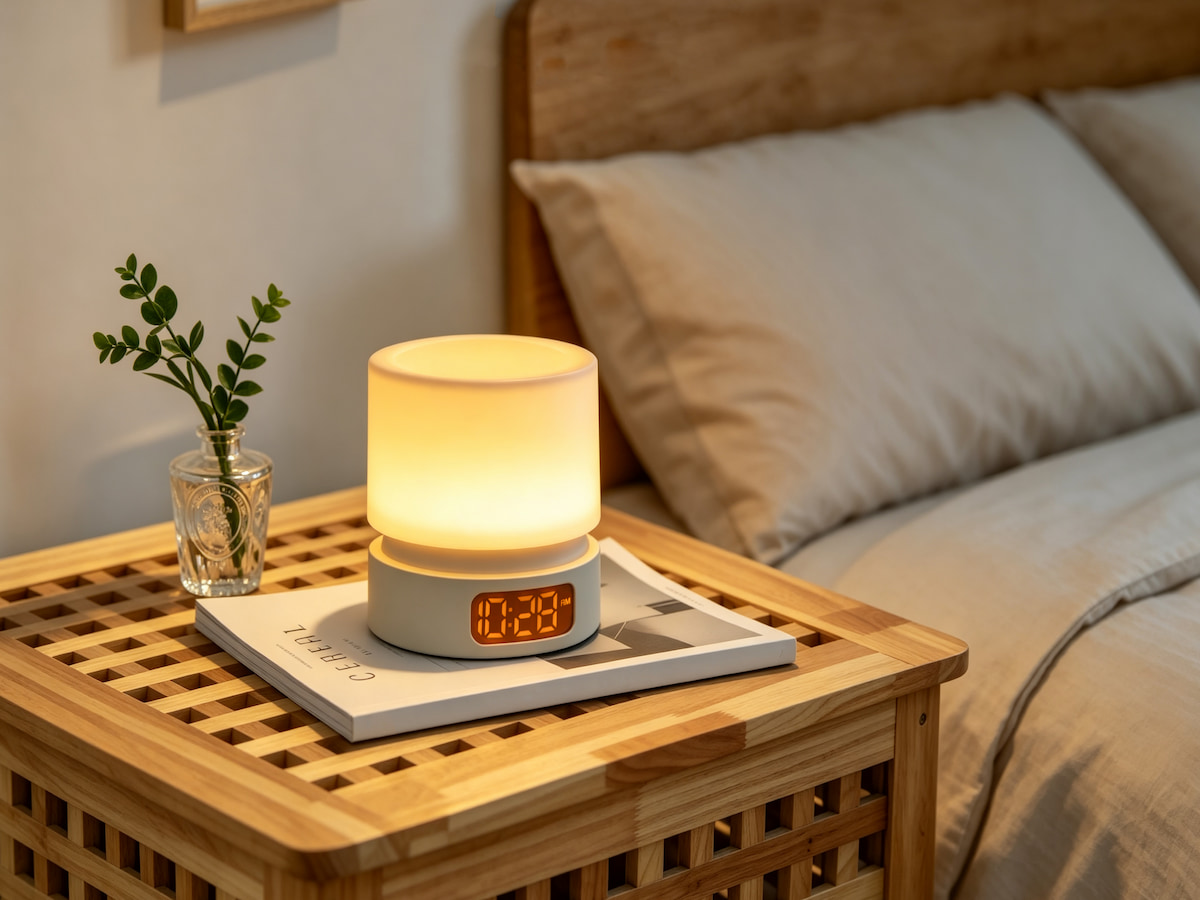
Furthermore, industrial designers are now blending lighting with comforting, child-friendly materials and multifunctional interfaces. For instance, an interactive baby night light that combines soft, huggable textures with digital alarm functions serves a dual purpose. During the infant stages, it provides a gentle, reassuring glow for late-night soothing. As the child grows into a toddler, the integrated clock helps establish healthy sleep-wake routines, acting as a visual cue for when it is time to get out of bed. This kind of thoughtful, multi-stage design represents a massive leap forward from the static, single-use plastics of the past.
The Economics and Ecology of Diode Technology
Beyond health and comfort, the widespread adoption of modern ambient lighting is heavily driven by energy efficiency and environmental sustainability. Traditional incandescent bulbs create light by heating a wire filament until it glows—a process that wastes approximately 90% of its energy as heat.
LEDs (Light Emitting Diodes), on the other hand, produce light through electroluminescence. When electrical current passes through a microchip, it illuminates the tiny light sources with incredible efficiency.
Comparing Lighting Technologies for Nighttime Use
|
Feature |
Modern LED |
Traditional Incandescent |
Halogen |
|
Average Lifespan |
50,000+ hours |
1,000 hours |
2,000 hours |
|
Heat Emission |
Negligible (Cool to the touch) |
High (Distinct burn hazard) |
Very High |
|
Energy Consumption |
Ultra-low (0.5W - 3W) |
High (15W - 40W) |
Medium (10W - 20W) |
|
Durability |
Solid-state (Drop resistant) |
Fragile glass & filament |
Fragile glass bulb |
|
Environmental Impact |
Low (No toxic chemicals) |
Moderate |
Moderate |
When left on for 8 to 10 hours a night, 365 days a year, the energy consumption of older bulbs quickly adds up on a household electricity bill. An LED alternative uses a fraction of a cent of electricity per night. When multiplied across multiple rooms in a home, the transition to diode-based ambient lighting becomes not just a stylistic choice, but a financially and ecologically responsible one.
Breaking Free from the Wall Outlet: The Cordless Revolution
The most significant limitation of traditional lighting has always been the power cord. You could only place a light where an architect happened to install a wall outlet. This often resulted in awkward room layouts, dangerous extension cords running under rugs, or shadowy corners in older homes with sparse wiring.
The integration of high-capacity lithium-ion battery technology with ultra-efficient LEDs has completely severed this tether. Modern homes are increasingly utilizing magnetic mounting systems and built-in batteries to put light exactly where it is needed, regardless of the home's electrical architecture.
This cordless flexibility is transforming functional spaces like closets, under-cabinet kitchen areas, and reading nooks. Whether you require focused, anti-glare illumination for studying at a desk or a portable beacon to carry down a dark staircase during a sudden power outage, a highly adaptable rechargeable night light offers ultimate freedom. With features like 360-degree rotation and magnetic snap-on bases, these devices function as stationary wall sconces one moment and portable flashlights the next. The ability to recharge via standard USB-C further eliminates the endless, environmentally damaging cycle of buying and throwing away alkaline batteries.
Strategic Placement for a Cohesive Smart Home
Integrating these small-scale lighting solutions into a modern floorplan requires a bit of strategy to maximize their benefits. Here is how homeowners are deploying them to create a seamless, intuitive living environment:
The evolution of household lighting mirrors the broader trends in consumer technology: a relentless push toward devices that are smaller, smarter, more efficient, and deeply personalized to human needs. We have moved far beyond the binary concept of simply turning a room "on" or "off." By carefully selecting and positioning tailored illumination, we gain the ability to sculpt our indoor environments, promoting better rest, enhancing physical safety, and adding a layer of quiet, intuitive convenience to the spaces we inhabit every day.

 English
 Español
 عربي
عربي 日语
日语 한국어
한국어